
African Orthodox Theological Institute · 2026–2028
Orthodox Spirituality and Spiritual Formation in Africa
A three-year study of how Orthodox spirituality forms Christians, leaders, monastics and clergy in Africa — and a deliberate effort to get African Orthodox writers into print.
The Templeton World Charity Foundation funds the project through the Nagel Institute for the Study of World Christianity at Calvin University.
The project is part of the Global Spiritual Formation Project, led by Professor David C. Wang of Fuller University and Professor Damaris Parsitau of Calvin University.
The research question
What is the impact of Orthodox spirituality on the formation of devout Orthodox Christians, leaders, monastics, and clerics in Africa?
01
The study
Personal and general spirituality underpin spiritual formation in the Orthodox Christian tradition. This is evident in Eastern Christian texts from the 3rd to the 9th centuries, during which the Orthodox clerical office and monasticism developed into their current forms. Spirituality is a lived practice, yet it is also taught to lay Christians, monastics, and clerical candidates within this tradition.
To understand that practice, the study evaluates how spirituality is expressed in contemporary Orthodox traditions among Christians, clergy, monastics, families and seminary students — a textual review of the historical and theological aspects of Orthodox spirituality, combined with an empirical review of how it is understood today among Africans engaged in this tradition.
02
Orthodox Christianity in Africa
The Orthodox Christian tradition takes pride in being the first Christian community in Africa, dating back to the first century, with biblical figures such as Symeon of Cyrene, the Ethiopian Eunuch and Mark the Evangelist among its first leaders. The desert monasticism of Northern Africa and the major theologians produced in the region remain a source of pride for this tradition. Despite that history, and the steady growth of Orthodox Christianity in Africa, Eastern (Greek and Russian) and Oriental (Coptic, Ethiopian and Eritrean) Orthodox Christians are often overlooked in most Christian quotas.
The study focuses on Eastern Africa — Ethiopia, Uganda and Kenya — which is leading the contemporary growth of Orthodox Christians on the continent. The Ethiopian Tewahedo Orthodox Church remains the largest Oriental Orthodox church in the world and in Africa, while Kenya and Uganda have the largest number of Eastern Orthodox members under the Greek Orthodox Patriarchate of Alexandria and All Africa, ranked second among the seventeen Eastern Orthodox local churches worldwide. Kenya also has a vibrant Coptic Orthodox tradition.
03
Three stages
Spirituality (pneumatikotita) is derived from spiritual (pneumatikos), denoting the state of the spiritual person — led by the spirit rather than the flesh. For the Orthodox this state is a lifelong journey, as one seeks to be united with God: theosis. Knowing the unknowable God becomes a cornerstone of Orthodox spirituality and a lifelong responsibility of each Orthodox Christian.
It unfolds in three overlapping yet progressively distinct stages. In purification, the beginner seeks to develop virtues, and through ongoing repentance and instruction their vices are replaced by virtues. In illumination, the spiritual person replaces all other thoughts with one, unceasing prayer. Perfection reaches full union with God. Since perfection is unlimited — God being eternal — there is no highest stage at any one time, and the struggle continues until death.
Orthodox spirituality is vividly demonstrated in the monastic tradition. The most renowned spiritual masters are the desert fathers, whose denial and self-emptying, combined with their spiritual exercises, turned the barren desert into a spiritual powerhouse. That spiritual wealth is reflected in the parish and in the day-to-day lives of lay Christians through spiritual elders and guides. What was experienced in the desert is also lived out in the family, though at varying levels, all aimed at the same objective.
04
Method
The study uses mixed historical, textual and empirical approaches. Qualitative interviews are combined with existing Orthodox literature on spirituality from the early church to the present, and a comparative reading of the Oriental and Eastern Orthodox traditions in Eastern Africa examines their similarities and overlaps. Where surveys are conducted, quantitative methods are used and presented alongside the qualitative.
Clergy and laity are interviewed and surveyed across the three stages of spirituality on some nineteen topics — among them praxis and theoria, fasting, prayer and almsgiving, scripture, the sacraments, theological education and formation, monasticism and asceticism, marriage and family, and the spirituality of women, youth, elders and children.
05
The writers' call
African Orthodox Christians have traditionally relied on works on spirituality from the Global North, and on North African works from the first Christian centuries. The experiences of sub-Saharan Orthodox Christianity have not been sufficiently investigated or published, either to inform the formation of other Christians or to reveal the unique contribution of African Orthodox Christianity.
So the project set out to build the capacity of African Orthodox theological writers, opening a way for Africans to publish for their own sake and as a contribution to global Orthodoxy. Clergy, theologians, leaders and writers from Eastern Africa were invited to submit abstracts for an academic book chapter; the strongest ten to fifteen advanced. Those selected were invited to a hybrid writers' workshop — first online, then in person in Nairobi.
Those who complete their work will have it published in an edited book in the United Kingdom, after peer review.
The workshop
20–22 August 2026, in Karen, Nairobi
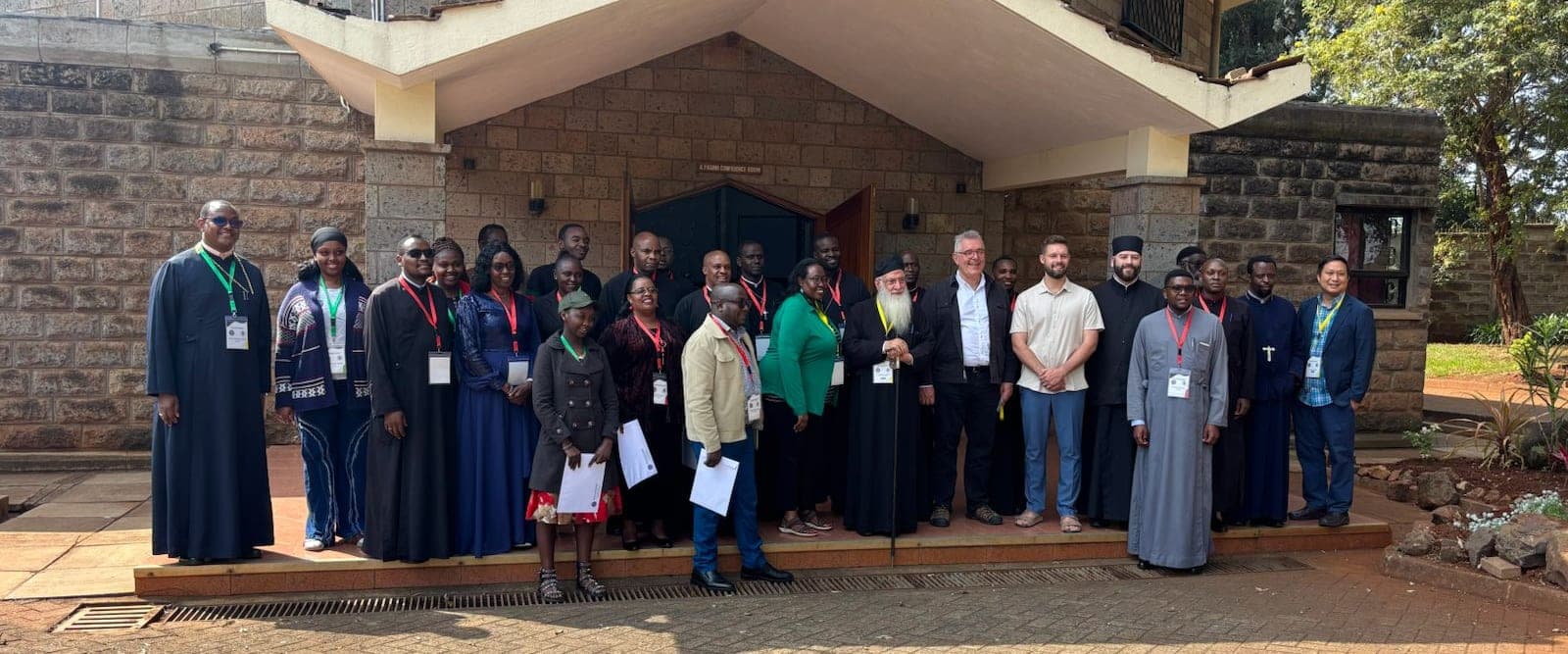
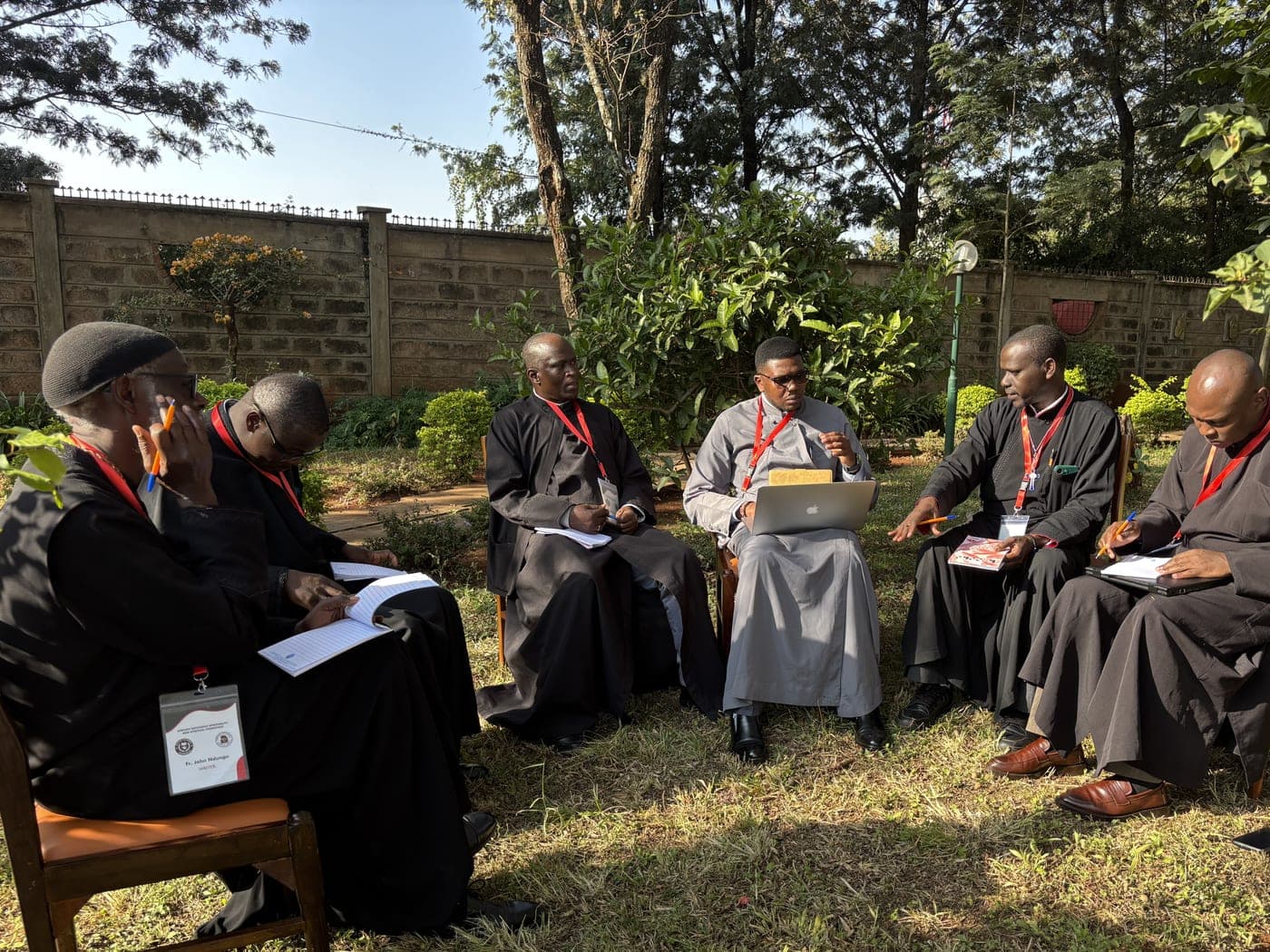
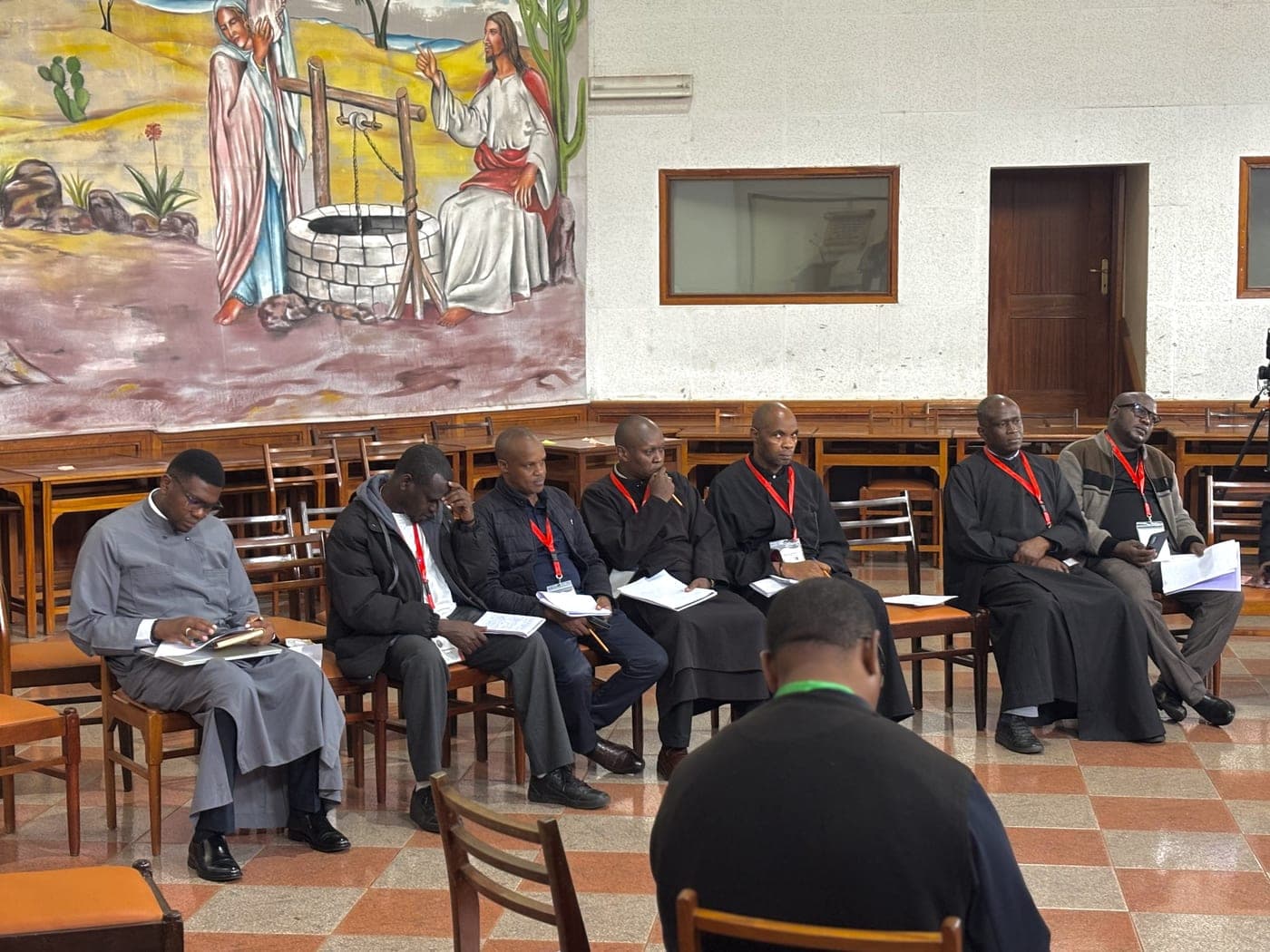
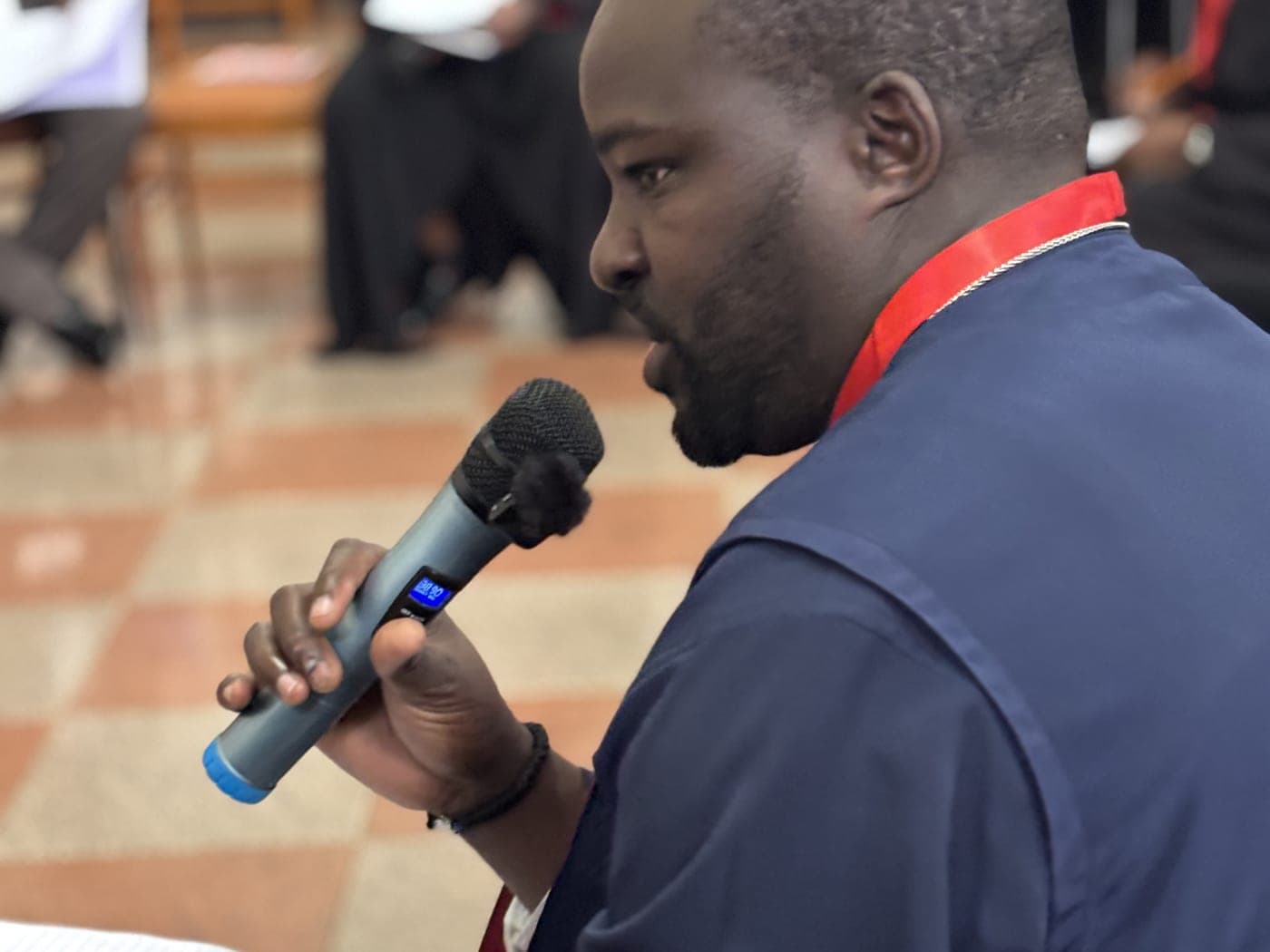
Writers from across the Orthodox Church in Eastern Africa met for three days in Karen, Nairobi, to work on what they were writing — presenting it, saying where it had become difficult, and asking for the help they needed.
African Orthodox writing, published for its own sake.
The project runs to 2028. If you are an Orthodox writer, scholar or cleric in Eastern Africa and want to know what comes next, write to us.